

The appliance makers expect a good churn in the festive season, led by the government's proposal to reduce the GST slab on air-conditioners from the current 28 per cent to 18 per cent, which will reduce the price from Rs 1,500 to Rs 2,500 depending on the models.
Durable goods companies and retailers say online sales won't compensate for the fall in offline sales.

The Anchor and Panasonic connection is a blend of legacy and quality and there really is no question of substituting one for the other. Panasonic is banking on Anchor's familiarity and widespread recall, to push its way ahead in the premium, automation-aided home appliances and accessories market.

In total, BSE would shift as many as 40 securities to the trade-for-trade category or 'T' Group while NSE would transfer 18 scrips to the segment on its platform, as per separate notices issued by both the bourses.
As home and kitchen is one of the most sought after categories during Diwali, the launch comes at a time when customers can enjoy shopping for appliances with ease and convenience, the company said.

Panasonic India is set to increase the prices of its products by up to 7 per cent, while some others players have already increased it.
Some companies argue that the culture of staying, working and learning at home will persist for a while, altering lifestyle habits of consumers.

'India can be the next growth leader for us.'

Sell it to the company's shares during the next year.
The industry is expecting double-digit growth on a year-on-year basis, helped by a possible price correction after softening of raw material inputs and factors such as positive sentiments, pent up demand and improving economic conditions. Besides, a shift in consumer behaviour from price consciousness towards technologically advanced premium products with quality, value proposition and safety aspects leading to a rise in demand for home automation products is making the industry upbeat. With the government's production linked incentive (PLI) scheme for white goods, which has witnessed a committed investment of Rs 4,614 crore, in place, many manufacturers are gearing up to make the most out of the opportunity as well as take steps towards reducing their dependency on imports and make products more affordable.
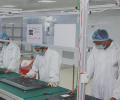
The stock of Dixon Technologies (India), the country's largest listed electronic manufacturing services (EMS) player, was up 6 per cent in 10 trading sessions, boosting the gains over the last three months to 21 per cent. The gains came following reports that Dixon will produce laptops in India in partnership with US and Chinese firms under the production-linked investment (PLI) scheme. It recently signed an agreement to make smartphones for Xiaomi India.

Consumer durable firms, including Haier, Whirlpool, Panasonic, Godrej Appliances and Daikin, are increasing prices of their products by up to 5 per cent following the withdrawal of excise duty sops, coupled with high input costs.

The Rs 1.5-trillion-a-year industry has ended the year with a 30 per cent fall in sales because after a steady recovery in the festive season, multiple factors dashed its hopes of revival at the end of the year.

But it may come with a downside risk of further rise in prices of several products.

Top companies across sectors -- automobile maker Maruti Suzuki, consumer electronics giant Samsung to IT giant Infosys -- have reopened factories and offices as India took its first steps towards resuming economic activity after weeks under a near-total coronavirus lockdown.

Urban markets account for the major share of total revenues.

Almost 40 per cent of a durable company's sales are achieved during the festival season

LG, Panasonic: Making in and for India LG and Panasonic are looking to revive their fortunes in India by building local insights into their new products.

The 30-share Sensex gained 321 points to end at 26,430 and the 50-share Nifty surged 100 points to end at 7,879.

With consumers staying indoors and e-commerce firms extending their reach to a larger number of pin codes, these giants have snatched a larger share from the offline traders this season.
Popular domestic home appliances brand Jaipan Industries is planning to set up a manufacturing unit in China.

With states in north India imposing stricter measures to curb intra-state movement after April 20, makers of summer products such as air conditioners, refrigerators, colas, and ice creams are estimating a 25-60 per cent drop in yearly sales.

While e-commerce operations for these firms are small at the moment, it is slated to grow in the next 3 to 4 years.

From fast food and athleisure to ACs, the demand for several non-discretionary items has spiked since May 17, when Lockdown 4.0 was extended till May 31.

Makers of air conditioners, beverage and ice-cream are hopeful of a boost in sales
Anticipation of weak sales this festive season due to deficient monsoon, especially outside big cities.

Good pay hikes, positive macroeconomic factors and the taming of inflation have had a positive effect on purchases

LG, Samsung, Videocon, Sony and Panasonic have instructed their trade partners that products sold through online marketplaces without their knowledge during flash sales will not get the benefit of after-sale service and warranties.

According to sources, government officials have asked industry bodies and manufacturers to submit key concerns and requirements to begin manufacturing activity.
Excise duty on most products has been capped at 12.5 per cent

Top carmakers, including Maruti Suzuki India, Hyundai and Honda, are expecting a spike in their sales following the implementation of 7th Pay Commission recommendations.

Consumer durables and electronics companies are putting the final touches to their festive period plans.

An old consumer electronics warhorse looks to leverage its past.
 © 2026 Rediff.com - Advertise with us - Disclaimer - Privacy Policy - Sitemap - Feedback - About us - Terms of use - Grievances